
Craters of the Moon

Big Cinder Cone
© National Park Service
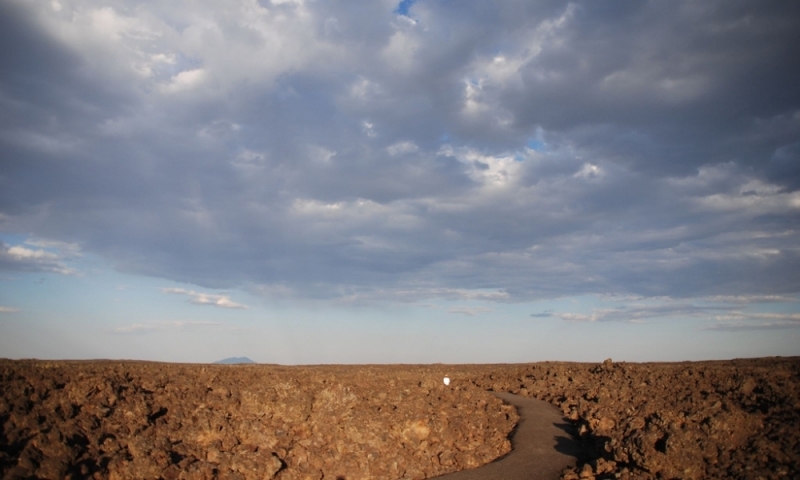
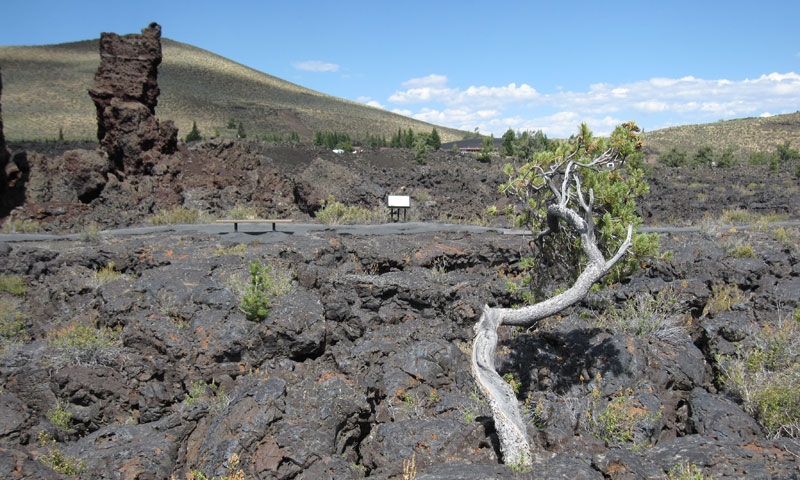
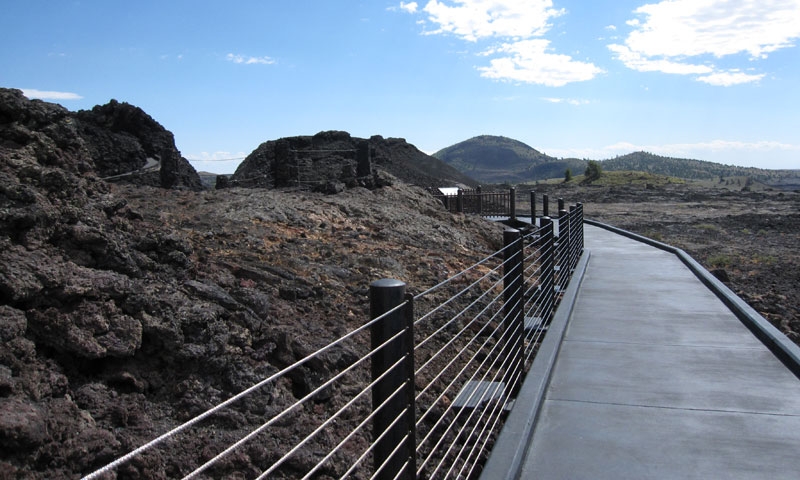
This National Monument is located 15 miles from Arco, Idaho, via U.S. Alternate Route 93 in the counties of Butte and Blaine. There are paved roads, open to vehicular traffic, however the southern part of the monument is a wilderness area and closed to all motorized vehicles. A seven mile loop drive offers a brief tour of this secluded monument. The loop weaves you around and through these rough and jagged volcanic features. There are several opportunities to pull over to enjoy the views and access paved trails. Trails vary in length from less than one mile to seven miles, and wheelchair access is available for a one mile loop. Along the trails are interpretive signs, which make the experience both educational and interactive. more info
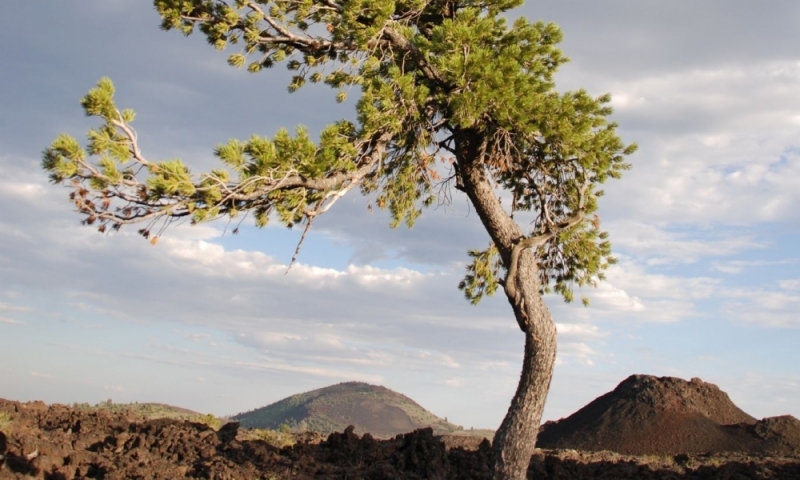
Craters of the Moon lies in the Picabo Volcanic Field. Its central focus is the Great Rift, a 62 mile long crack in the earth's crust. The Great Rift is the source of a remarkably preserved volcanic landscape with phenomenal geologic features typical of basaltic volcanism. Craters, cinder cones, lava tubes, deep cracks, and vast lava fields form a strangely beautiful volcanic sea on central Idaho's Snake River Plain.
Volcanic eruptions first began about 15,000 years ago, with its most recent ending about 2,100 years ago. It is likely these eruptions were witnessed by the Shoshone Indians. A Shoshone legend speaks of a serpent on a mountain. The serpent is angered by ligntening and coils around the mountain, squeezing until there is a flow of liquid rock, with fire shooting from the cracks and the mountain exploding.
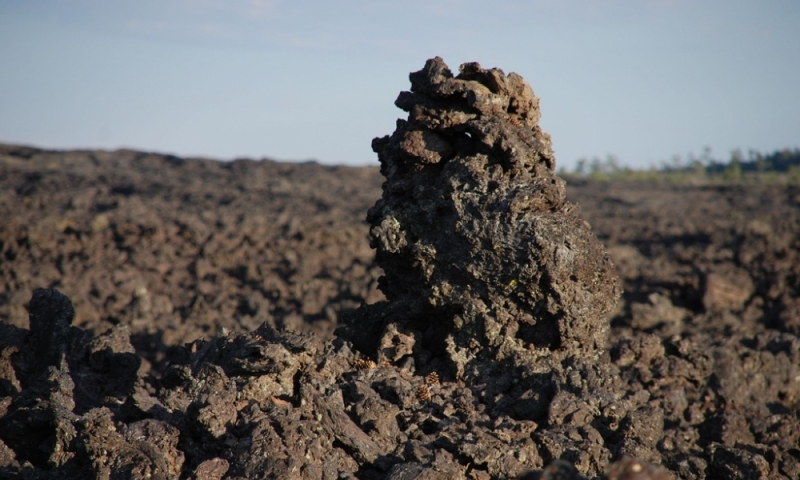
Today, the volcano is dormant, but its eruptive past is well preserved. Eight times in the past 15,000 years lava poured from cracks which opened along this weak spot in the earth's crust. Expanding gases in the lava ejected bubbly rocks hundreds of feet into the air. In some cases these cinders showered the ground to form cones. Less explosive lava flowed in sheets and rivers. The lava moving beneath the congealing crust sometimes tugged the surface into folds resembling coils of rope. This type of lava is called pahoehoe. Cooler and thicker lava would inch along twisting and shattering into tumbled masses of jagged rocks, known as aa lava. Both names are Hawaiian with pahoehoe meaning "ropy" and aa meaning "rough on the feet".
Craters of the Moon lava field consists of more than 60 mappable lava flows, around 25 cinder cones, and eight fissure systems. This special preserve is unique to our planet. Appropriately named, it closely resembles the surfaces of the moon. In 1969, Apollo 14 astronauts were sent to this monument to study the surfaces they would be encountering when they traveled to the moon.
On your way to or from Yellowstone, or if you have a layover in Idaho Falls or Twin Falls, Idaho, take the extra time to explore Craters of the Moon, located approximately 120 miles from West Yellowstone. There is a close relationship between Yellowstone and Craters of the Moon by a hot spot underneath the earth's crust. It is believed that the hotspot which created Craters of the Moon is now located in Yellowstone National Park. Vastly different in geologic features, Craters of the Moon can offer insight to Yellowstone's potential fate.
Stop in the visitor center for an overview of the natural history and geology of the area. Accomodations and food can be found in the town of Arco, the first city lighted entirely by nuclear energy. Campsites are available in the monument area and are open spring, summer, and fall. Craters of the Moon is located about 90 miles east of Idaho Falls, Idaho and 90 miles north of Twin Falls, Idaho.
Craters Of The Moon, ID Weather
|
Currently Outside Sunny. Cool. |